
EURASIAN WATERMILFOIL and White Sand Lake
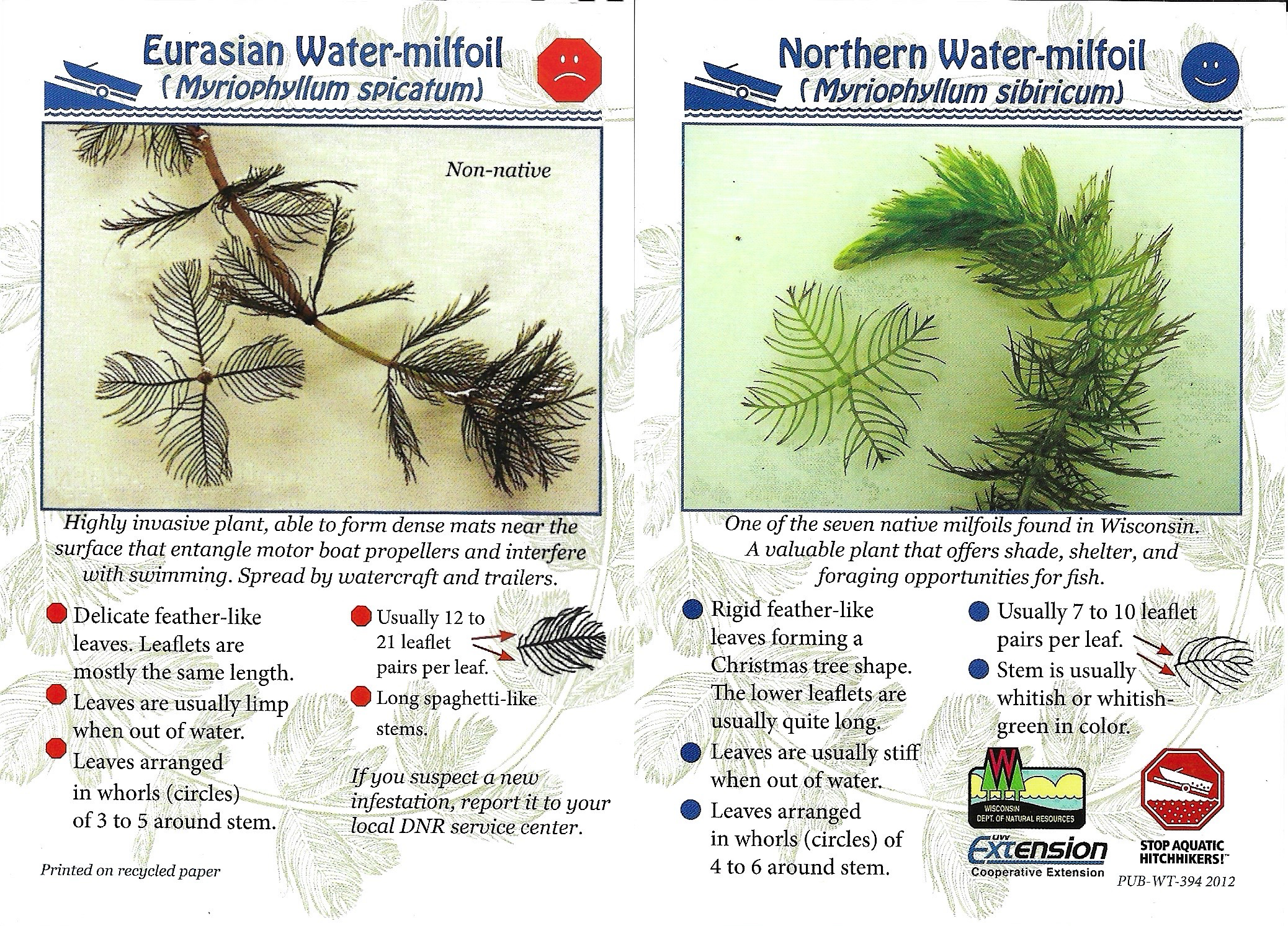
(Myriophyllum spicatum)
Eurasian Watermilfoil is a submersed, rooted aquatic plant native to Europe, Asia, and northern Africa. It was first reported in the United States in the 1880s and Wisconsin in the 1960s. Eurasian Watermilfoil can reproduce via fragmentation, meaning a single stem fragment introduced to a waterbody could take root and establish a new population. Although it is present in almost every county in Wisconsin, it has only been verified in less than 10 percent of waterbodies statewide.
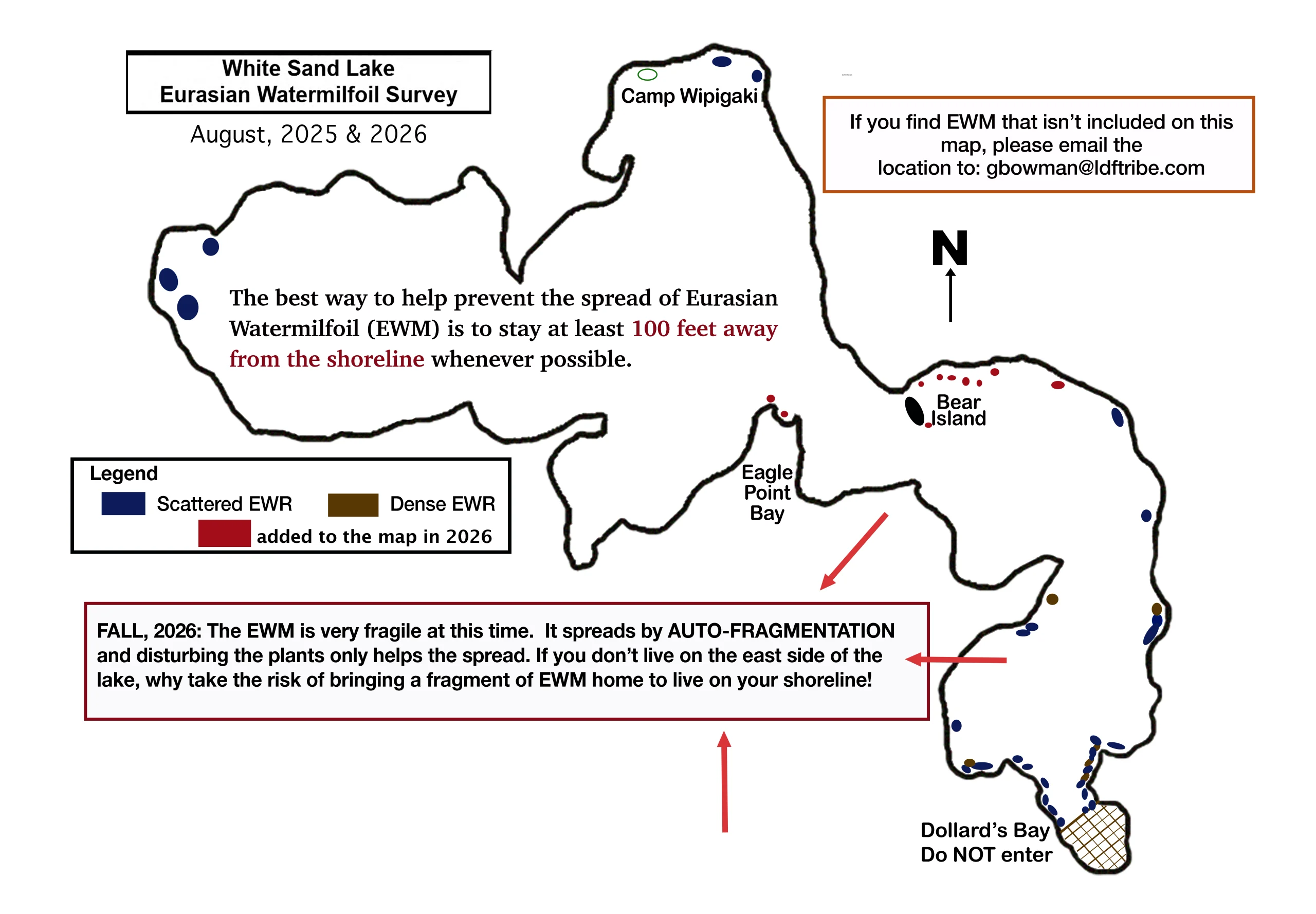
Can you spot Eurasian Watermilfoil (EWM) at the surface of the lake?
August, 2026: Yes, the plant has grown tall and toward the sunlight. The roots are spreading and younger plants may be growing near the bottom. Stay away–Auto-fragmentation is one method that the plant uses to spread.
If you get to close, you risk chopping the plants with your propeller or hull. Even small fragments can attach to the underside of your boat or trailer and be transported to another part of the lake—or even to your own shoreline—where they can take root and spread.
The photos below were taken in July 2026, when EWM was in bloom and extending above the water’s surface. During this stage, the plant produces flower spikes that release seeds, which are dispersed by wind and wave action, further contributing to the spread of this invasive species.
The best way to help is simple: Avoid boating through known EWM beds, stay in deeper water whenever possible, and always inspect and clean your boat, trailer, and equipment before leaving the lake.


Zebra Mussels
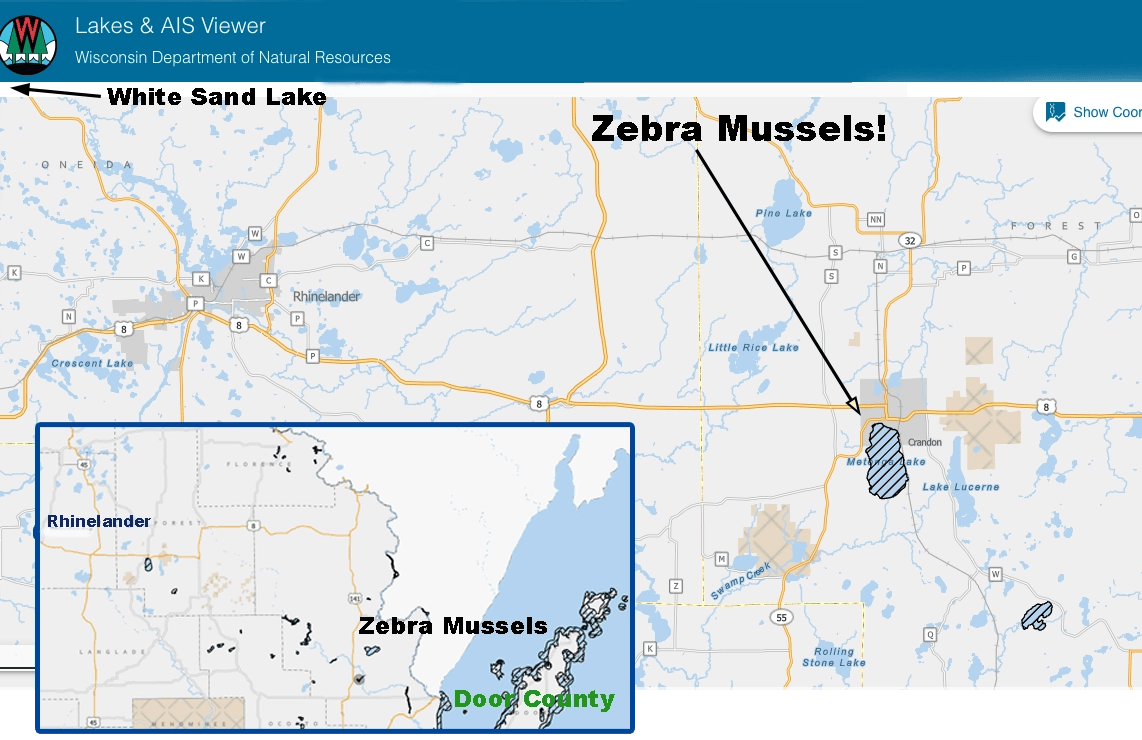
Banded & Chinese Mystery Snail
Spiny Waterflea Spiny Waterflea Video

Steer Clear: Stop the Spread


PLEASE visit the WSL Area AIS tool – KNOW before you GO! click here

AIS in neighboring LAhttps://whitesandlakeldf.com/ais/KES
Clean Boats, Clean Waters-It’s the Law!
Purple Loosestrife & Phragmites

Interested in doing your own research?
Assist:
If you believe you have found EWM, please collect a six-inch sample, place it in a zip-top bag, and have it identified by the Tribal Natural Resources Department (TNR):
Tribal Natural Resources Department
1095 Old Abe Road
Lac du Flambeau, WI 54538
You may also contact Gabe Bowman, Aquatic Invasive Species Coordinator, at gbowman@ldftribe.com or (715) 904-1664.
We are not alone. What is happening elsewhere?
FYI: Minocqua/Kawaguesaga Lakes Protection Association has a fundraising goal for 2027 of $170,000 to fight EWM in their lakes.

Eagle River Chain of Lakes Association
The Manitowish Waters chain of lakes, Gunlock and Shishebogama Lakes all have Curly-leaf Pondweed. WSL does NOT–let’s NOT bring this AIS to WSL!
